
Severe ankle arthritis can make everyday activities such as walking, climbing stairs, or standing for long periods increasingly difficult. As damage within the ankle joint progresses, persistent pain, stiffness, swelling, and limited mobility can begin to interfere with work, exercise, and daily life. When nonsurgical treatments no longer provide enough relief, ankle fusion surgery may be considered.
Also known as ankle arthrodesis, ankle fusion is a surgical procedure that stabilizes a severely damaged ankle by joining the bones of the joint together. The goal is to reduce painful movement within the arthritic joint and create a more stable ankle.
Understanding how ankle fusion works, when it may be recommended, and what to expect during ankle fusion recovery can help patients have a more informed conversation with their podiatrist or foot and ankle surgeon.
Table of Contents
What Is Ankle Fusion Surgery?
Ankle fusion surgery, also known as ankle arthrodesis, is a procedure used to treat severe damage within the ankle joint, often caused by advanced arthritis. When the cartilage that normally cushions the ankle wears away, the bones can begin to rub against one another, resulting in pain, stiffness, swelling, and difficulty walking.
During an ankle fusion, the damaged joint surfaces are prepared so the bones can heal together. The bones are positioned and stabilized, typically using surgical hardware such as screws or plates. As healing occurs, new bone develops between the prepared surfaces until they eventually form one solid unit.
Once the ankle has successfully fused, movement at the treated joint is eliminated. Although this permanently changes ankle motion, it can reduce pain caused by movement within a severely arthritic joint and provide greater stability.
When Is Ankle Arthrodesis Considered for Severe Arthritis?
Ankle arthrodesis is generally considered for advanced ankle arthritis rather than mild or occasional ankle discomfort. Patients may have persistent pain, stiffness, swelling, limited range of motion, or difficulty putting weight on the affected ankle.
As these symptoms become more severe, activities such as walking, working, exercising, and climbing stairs may become increasingly difficult.
An arthrodesis ankle procedure is typically not the first treatment considered. Depending on the condition of the joint and the patient’s symptoms, nonsurgical treatments may be explored first. If those approaches no longer provide adequate relief and arthritis continues to significantly affect mobility or quality of life, surgical options may be discussed.
A podiatrist or foot and ankle surgeon can examine the ankle, review imaging, evaluate the extent of joint damage, and determine whether ankle fusion or another treatment may be appropriate.
What Happens During Ankle Arthrodesis Surgery? kauf
kauf
 kauf
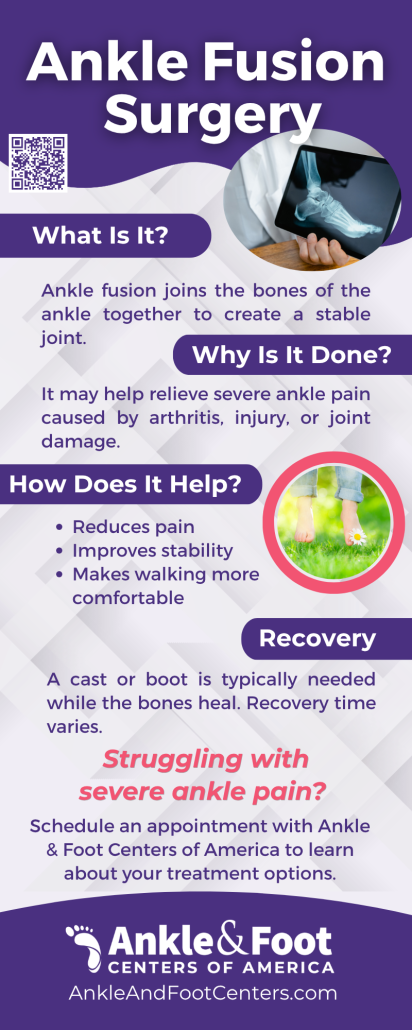
kaufDuring ankle arthrodesis surgery, the surgeon prepares the damaged ankle so the bones can heal together and form a stable joint. The specific surgical approach can vary depending on the severity of the arthritis, condition of the ankle, and individual needs of the patient.
The damaged cartilage is removed from the joint, and the surfaces of the bones are prepared for fusion. The ankle is then placed in an appropriate position, and surgical hardware such as screws or plates may be used to hold the bones securely in place.
Over time, new bone growth develops across the joint and allows the bones to join together. The goal is to create a stable fusion that eliminates painful movement within the damaged ankle joint.
Different surgical techniques may be used to perform ankle fusion surgery. Before the procedure, the surgeon can explain the recommended approach and what the patient can expect during surgery and recovery.
What Are the Potential Benefits of Ankle Fusion?
For patients with severe ankle arthritis, one of the primary goals of ankle fusion is to reduce chronic pain originating from the damaged joint. Because the procedure eliminates movement between the arthritic joint surfaces, it can reduce the painful bone-on-bone motion associated with advanced arthritis.
Ankle arthrodesis can also provide greater stability to a severely damaged ankle. Following successful healing, some patients may find it easier to walk and perform everyday activities with less discomfort.
However, ankle fusion involves an important tradeoff. The treated ankle joint no longer moves after it has successfully fused. Surrounding joints within the foot can continue to provide some motion, but patients should understand that their ankle mechanics will change.
Discussing these potential benefits and limitations with a podiatrist or foot and ankle surgeon can help patients develop realistic expectations before deciding whether surgery is appropriate.
What to Expect During Ankle Fusion Recovery
Ankle fusion recovery occurs gradually as the bones heal together and the ankle becomes stable. Recovery can vary considerably between patients depending on factors such as the surgical approach, overall health, extent of joint damage, and progression of bone healing.
During the early stages of recovery, the ankle typically needs to remain protected. Depending on the surgeon’s recommendations, a patient may use a cast, walking boot, crutches, or another assistive device. Weight-bearing is generally adjusted as healing progresses rather than immediately returning to normal activity.
Follow-up appointments are an important part of recovery. X-rays or other imaging may be used to evaluate the developing fusion and help the surgeon determine when it is appropriate to increase weight-bearing and activity.

How Long Is Ankle Fusion Recovery Time?
There is no single ankle fusion recovery time that applies to every patient. Bone fusion takes time, and returning to normal activities usually occurs in stages based on how well the ankle is healing.
The surgeon will monitor the fusion during follow-up appointments and provide guidance about when the patient can progress with weight-bearing, footwear, work, exercise, and other activities. Rehabilitation may also be recommended to improve strength, balance, and overall function as recovery progresses.
Because healing rates vary, patients should rely on their surgeon’s evaluation rather than a predetermined timeline when deciding when to increase activity after ankle fusion surgery.
How Does Ankle Fusion Affect Walking and Mobility?
One of the most common questions patients have about ankle fusion is whether they will be able to walk normally afterward. Because ankle arthrodesis permanently eliminates movement at the treated ankle joint, some changes in walking and mobility should be expected.
However, the surrounding joints within the foot continue to provide some motion and can help the foot adapt during everyday movement. Following successful ankle fusion recovery, many patients are able to return to walking and routine daily activities with less pain from the arthritic joint.
The amount of mobility after surgery varies from person to person. Some patients may notice differences when walking on uneven surfaces, climbing stairs, or participating in activities that require greater ankle flexibility. Footwear, rehabilitation, strength, and the condition of the surrounding joints can also influence overall function.
Patients considering surgery should discuss their work responsibilities, exercise habits, recreational activities, and mobility goals with their surgeon to better understand how ankle fusion could affect their lifestyle.
Is Ankle Fusion Surgery Right for You?
Deciding whether ankle fusion surgery is appropriate involves more than determining the severity of arthritis. The procedure permanently changes the way the ankle moves, making a patient’s lifestyle, activity goals, overall health, and expectations important parts of the decision.
For example, the physical demands of a patient’s job, preferred forms of exercise, condition of the surrounding joints, and desired level of activity may influence whether ankle arthrodesis is an appropriate option. Other nonsurgical or surgical treatments may also be considered depending on the condition of the ankle.
A podiatrist or foot and ankle surgeon can review these factors alongside examination and imaging findings to help patients understand their treatment options.
If severe ankle arthritis continues to limit walking, activity, or quality of life despite nonsurgical care, an evaluation can help determine whether ankle fusion surgery may be appropriate.

Talk to a Podiatrist About Ankle Fusion for Severe Ankle Arthritis
Living with severe ankle arthritis can make walking, working, exercising, and other everyday activities increasingly challenging. When persistent pain and stiffness are limiting mobility, a podiatric evaluation can provide a clearer understanding of the extent of joint damage and the treatment options available.
For some patients with advanced arthritis, ankle fusion surgery may help reduce pain and create a more stable ankle. Also known as ankle arthrodesis surgery, the procedure is one of several treatment approaches that may be considered based on joint damage, previous treatments, overall health, lifestyle, and long-term activity goals.
If ankle arthritis is affecting your quality of life, schedule an appointment with a podiatrist for a comprehensive evaluation. Your provider can determine whether ankle fusion or another treatment option is appropriate and help you understand the next steps in your care.